
What Are NDIS Funding Periods and How Do They Affect My Budget?
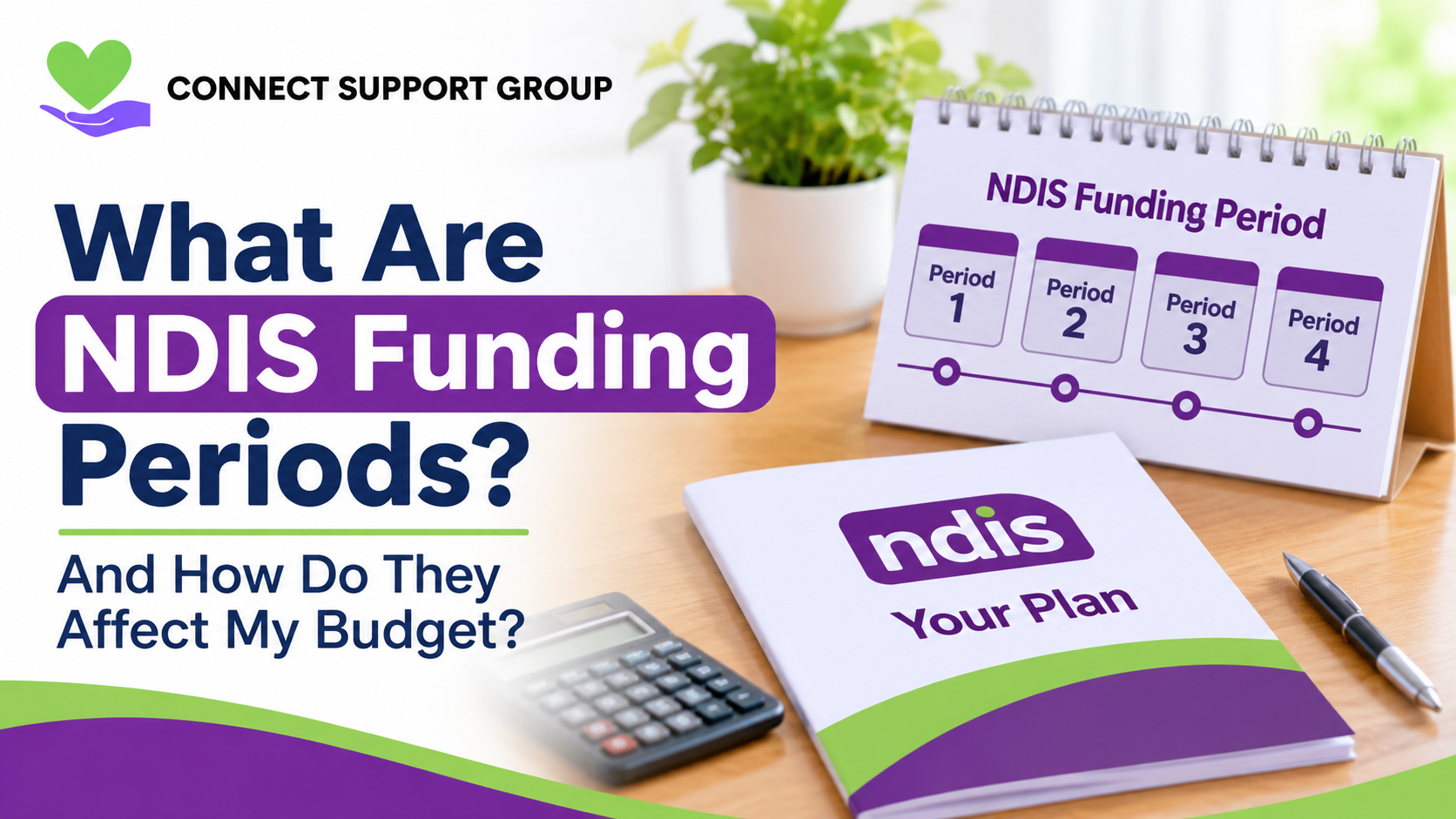
An NDIS funding period is a block of time within your plan during which a set part of your funding becomes available to use. Since 19 May 2025, most new and reassessed NDIS plans release funding in funding periods, usually every three months, instead of making the whole budget available on day one. Funding periods do not change the total amount of funding in your plan. They only change when you can use it. Unspent funding rolls over to the next funding period within the same plan, but not into a new plan, and you cannot use funding from a future period early. If your funding runs out before a period ends, talk to the NDIA or your plan manager.
This guide explains how funding periods work, how they affect your budget, how they fit with the different ways of managing a plan and with the October 2026 funding changes, and practical ways to make your funding last. It is written for participants and for the families and carers who help them manage a plan.
What is an NDIS funding period?
The NDIA describes a funding period as the time during which part of a participant’s funding is available. A funding period can apply to the total funding in your plan, or to specific parts of it, called funding components.
Funding periods are not completely new. Changes to the NDIS Act introduced them in October 2024, and new and reassessed plans approved after that included 12-month funding periods. The bigger change came from 19 May 2025, when the NDIA began introducing shorter funding periods, usually three months, to new and reassessed plans.
If you have a plan that started before these changes and has simply continued, you may not have shorter funding periods yet. You will see them once you receive a new or reassessed plan.
Why did the NDIA introduce funding periods?
The NDIA says participants told it that receiving all their funding at the start of a plan made budgeting hard, and increased the risk of overspending or running out of funds before the plan ended. Releasing funding at regular intervals is meant to help supports stay available for the whole length of the plan.
The NDIA sets the length and amount of each funding period in line with NDIS laws, taking into account a participant’s individual needs and circumstances. That includes their preferences, any risk of overspending, and any risk of harm, fraud or financial exploitation.
How long is an NDIS funding period?
For most participants, funding periods are three months long. That means a 12-month plan will usually have four funding periods, with part of your funding released at the start of each one. The NDIA can set different lengths depending on your circumstances, so always check your own plan rather than assuming.
Some types of funding work a little differently:
- Core supports: the flexible core support categories in your plan share the same funding period length, so they are released together.
- Recurring transport: transport funding in the recurring supports budget has a 12-month funding period and is paid to you in regular instalments during that period. Our guide on whether the NDIS can pay for transport to community activities explains how recurring transport works.
Do funding periods reduce my total funding?
No. This is the most important thing to understand. Funding periods change when your funding becomes available, not how much funding you have. The total in your plan stays the same. What changes is that you cannot spend it all at once.
Some participants found that having the full budget available from day one made it easy to use too much early in the plan and run short later. Funding periods are designed to spread spending more evenly. For participants whose support needs are fairly steady from week to week, this may already match how they use supports.
What happens to unused funding at the end of a funding period?
If you do not use all the funding available in one funding period, it rolls over to the next funding period within the same plan. So if you have a quieter few weeks, for example over a holiday break, you have not lost that funding. It carries forward.
Unused funding does not roll over into a new plan. When your plan ends and a new one starts, anything left in the old plan stays with the old plan. That is why it is worth checking your balance well before your plan’s end date.
What happens if I run out before the funding period ends?
You can only use the funding that has been made available up to and during the current funding period. If it runs out early, you will not be able to use more funding until the next period starts. In practice, that can mean supports need to be paused or rescheduled, and invoices may not be able to be paid until new funding is released.
If this happens, the NDIA says you should talk to the NDIA or your plan manager about what support may be available. If your situation has changed and you need more or different supports, you can also ask for a change to your plan. Our guide to updating your NDIS plan if your needs change explains how.
How do I check my funding periods?
Your funding periods are shown in your NDIS plan document, the participant portal and the my NDIS app. They show:
- how much funding you have
- how much you have spent
- when the next amount becomes available
If your plan is plan managed, your plan manager can also give you regular statements showing what has been spent against each part of your budget.
How do funding periods work with each way of managing my plan?
Funding periods apply however your plan is managed. What changes is who keeps track of spending day to day.
NDIA-managed plans
Your providers claim payment from your plan through the NDIS system, and they can only be paid from funding that is available. It is still worth keeping an eye on your balance in the portal or app, because you will not always see claims as they happen.
Plan-managed plans
Your plan manager pays your providers’ invoices from the funding available in your plan. A good plan manager will help you see how much is left in each funding period and let you know if spending is running ahead of schedule, so you can adjust before you run short. An NDIS plan manager is funded through your plan, and you are free to choose any plan manager you like.
Self-managed plans
You pay your providers and claim the money from your plan yourself, so keeping within each funding period is your responsibility. A simple spreadsheet or budgeting tool that tracks spending by funding period can help.
If you are deciding which option suits you, read our comparison of self-managed, plan-managed and NDIA-managed funding.
How do funding periods work with the October 2026 funding changes?
These are two separate changes, but they affect each other. From 1 October 2026, funding for Social, Economic and Community Participation supports is being reduced by 50 per cent, and funding for Improved Daily Living Skills supports by 10 per cent. The reset is applied when your plan is created or reassessed, or renewed from 1 February 2027. Your new, smaller amount in those categories will then still be released in funding periods.
In practice, that means less funding is released in each period for those supports, so it becomes even more important to plan how many hours of support you can use in each period. Read what the 2026 NDIS changes mean for community participation for more detail.
How can I make my funding last with funding periods?
A few habits make a big difference:
- Work out your budget per funding period, not just per year. Look at how much is released each period for each type of support, and how many hours of support that covers.
- Match your regular supports to that amount. Weekly supports should fit comfortably within each period, with a little left over.
- Leave a buffer. Extra sessions, short notice cancellations and one-off costs can all use funding you did not plan for.
- Plan bigger items early. If you need an assessment or report, talk to your provider about when it can happen so it fits within the funding available.
- Check your balance as each period ends. It is easier to adjust early than to find out halfway through a period that funding has run out.
- Keep your service agreements in line with your funding. If an agreement books more support than a funding period can pay for, raise it with your provider. Our guide to what an NDIS service agreement should include can help.
- Keep notes. A record of what you used, what worked and where you ran short is useful evidence at your next reassessment.
How do I plan a single funding period?
If budgeting by funding period is new to you, it can help to walk through one period step by step. It only takes a few minutes once you have your plan in front of you.
- Find the dates. Check your plan, the portal or the my NDIS app for when the current funding period starts and ends, and how many weeks it covers.
- Find the amounts. Note how much funding has been released for each part of your budget in this period, including anything rolled over from the last one.
- List your regular supports. Write down each support you use most weeks, how many hours, and which part of your budget pays for it, then work out the total for the number of weeks in the period.
- Add the extras. Include anything you already know is coming up in this period, such as an assessment, a report, a group program or a school holiday activity.
- Compare and adjust. If the total is higher than the funding available, talk to your providers now about changing the pattern of support, rather than waiting until the funding runs out.
Repeat the check at the start of each new funding period. Over a few periods, you will get a feel for how your spending tracks, and the check becomes quicker.
What do funding periods mean for providers?
Funding periods also change how providers need to plan. A provider can only be paid from funding that has been released, so a support schedule that does not match a participant’s funding periods can leave invoices unpaid until the next period starts, and can leave the participant without support when they need it.
Providers can help by checking the funding available in each period before agreeing a schedule, keeping service agreements in line with that funding, invoicing promptly so participants and plan managers can see where the budget stands, and raising concerns early if a participant’s funding looks likely to run short. Good communication protects both the participant and the provider, and it fits the NDIS principle that participants should have choice and control over how their funding is used.
What should carers and families know?
If you help someone manage their plan, funding periods add a regular rhythm to budgeting. A quick check at the start and end of each period is often enough to spot problems early. If the person you support has a support coordinator, they can help you plan supports across funding periods and work out what to do if funding is not enough. Keep the participant involved in decisions about how their funding is used, and look after your own wellbeing too.
Frequently asked questions about NDIS funding periods
Do funding periods change how much funding is in my NDIS plan?
No. Funding periods change when your funding becomes available, not the total amount of funding in your plan.
How long is an NDIS funding period?
For most participants funding periods are three months long, but the NDIA can set different lengths depending on a participant’s needs and circumstances. Recurring transport funding has a 12-month funding period paid in regular instalments.
What happens to funding I do not use in a funding period?
Unused funding rolls over to the next funding period within the same plan. It does not roll over into a new plan.
Can I use next funding period’s money early?
No. You can only use funding that has been made available. If your funding runs out early, talk to the NDIA or your plan manager, and ask for a plan change if your needs have changed.
Where can I see my funding periods?
Your funding periods are shown in your NDIS plan document, the participant portal and the my NDIS app, including how much you have spent and when the next amount becomes available.
Need help keeping track of your funding?
Funding periods are easier to manage with someone keeping an eye on the numbers. Connect Support Group offers NDIS plan management from Vermont, with a team that speaks English, Mandarin and Cantonese. Whichever plan manager you choose, the choice is yours. Call us on (03) 9874 8628 or send us an enquiry online.